
Fishing Swivels Explained - Types, Sizes, and When to Use Each
A swivel is one of the smallest pieces of hardware in your tackle box and one of the most misunderstood. Some anglers clip a snap swivel on everything they throw. Others refuse to use swivels at all because they heard they spook fish. Both camps are wrong. The reality is simple - there are specific situations where a swivel is critical, specific situations where it'll cost you fish, and knowing the difference is what separates a clean rig from a tangled mess.
If you're trolling without ball bearing swivels, you're losing fish. Period. But if you're tying a snap swivel to a topwater plug, you're killing the lure's action. Context is everything with swivels, and the type you choose matters as much as whether you use one at all.
Types of Fishing Swivels

Ball Bearing Snap Swivels | 5 Pack | Epic Fishing Co.
Stainless steel ball bearing swivels with welded rings and coastlock snap
From $12.99
Shop NowNot all swivels are built the same. Each type serves a specific purpose, and grabbing the wrong one can create more problems than it solves. Here's what you need to know about each.
Barrel Swivels
Barrel swivels are the most basic and most common swivel you'll find. Two wire eyes connected by a brass or stainless barrel that rotates. They work fine for light-duty applications - connecting a leader to your main line when you're bottom fishing, or as a stopper above a sliding sinker rig. They're cheap and they get the job done when loads are moderate and rotation speed doesn't matter.
Where barrel swivels fail is under load. When a fish is pulling hard or a lure is spinning fast, the friction inside a barrel swivel increases and the swivel essentially locks up. That's why barrel swivels are a poor choice for trolling - they stop rotating when you need them most. They also tend to be made from lower-quality materials, which means they corrode faster in saltwater.
Crane Swivels
Crane swivels are a step up from barrel swivels. The eye design allows for smoother rotation under moderate load, and they're generally built from better materials. Think of them as the middle ground - stronger and smoother than a barrel swivel but not in the same league as ball bearing models. Crane swivels work well for bottom rigs, fish finder rigs, and light trolling with non-spinning lures.
Ball Bearing Swivels
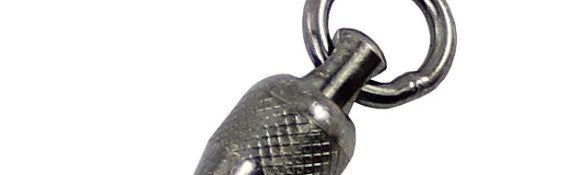
This is where the real engineering lives. Ball bearing swivels use internal stainless steel ball bearings that allow the swivel to rotate freely even under heavy load. When a tuna is screaming drag at 300 yards or a trolling lure is spinning at 6 knots, a ball bearing swivel keeps turning. A barrel swivel would have locked up 200 yards ago.
The Epic Fishing Co. ball bearing snap swivels are our top recommendation - stainless steel construction, smooth rotation under load, and a welded ring that won't open under pressure. For trolling spreads and heavy offshore applications, the Billfisher ball bearing snap swivels and Diamond ball bearing snap swivels are both solid options in the higher test ranges. The AFW stainless ball bearing snap swivels round out the lineup with a proven track record in tournament fishing.
If you're trolling for anything - king mackerel, tuna, wahoo, mahi, sailfish - use ball bearing swivels. There is no substitute and no budget alternative that performs the same. A cheap barrel swivel in your trolling spread will cost you the fish of the day. For a full breakdown of building a trolling spread, check out our trolling spread rigging guide.
Snap Swivels
Snap swivels combine a swivel body with a snap clip that lets you change lures quickly without retying. The Epic double snap swivel gives you a snap on both ends for maximum rigging flexibility, and the Billfisher double snap swivel is another option for heavier applications.
Snap swivels are convenient but use them in the right context. They're great for bottom rigs where you want to swap sinkers or leaders fast. They work well on spoons and spinners where the snap allows the lure to swing freely. They're terrible on jerkbaits, topwater plugs, and soft plastics - the weight and bulk kills the lure action. For those lures, tie directly to a split ring or use a loop knot.
3-Way Swivels
3-way swivels have three eyes radiating from a central barrel, and they're designed for one specific purpose - running a dropper rig. Your main line connects to one eye, a sinker dropper to the second, and your hook leader to the third. The Sea Striker stainless steel 3-way swivel handles this application well in sizes appropriate for inshore through nearshore bottom fishing.
This rig keeps your bait suspended off the bottom while the sinker holds position in current. It's a staple for bottom fishing from boats in rivers, inlets, and over structure. Some anglers use them for king mackerel slow-trolling rigs where they want to run a weight below the main line to get a live bait deeper.
Wind-On Swivels
Wind-on swivels are specialized hardware designed to connect hollow core braided line to heavy monofilament or fluorocarbon leaders. The Diamond wind-on swivels feature a streamlined profile that passes through rod guides without hanging up - critical when you're fighting a big fish and need to wind the leader connection onto the reel. These are standard equipment for offshore trolling with wind-on leader systems.
Swivel Size Chart
Browse 30+ products
Browse CollectionSwivel sizes are counterintuitive - smaller numbers mean bigger swivels. A size 1 is larger than a size 7. Here's a reference chart matching swivel sizes to pound-test ratings and typical applications. Keep in mind that ratings vary by manufacturer and swivel type, so these are general guidelines.
| Swivel Size | Barrel Rating (lb) | Ball Bearing Rating (lb) | Application |
|---|---|---|---|
| Size 7 | 20-30 | 25-40 | Light inshore, trout, flounder |
| Size 5 | 40-60 | 50-75 | Redfish, stripers, small kings |
| Size 3 | 60-100 | 75-150 | King mackerel, mahi, cobia trolling |
| Size 1 | 100-150 | 150-250 | Tuna, wahoo, heavy trolling |
| Size 1/0 | 150-200 | 250-400 | Marlin, large tuna, heavy offshore |
| Size 3/0+ | 200+ | 400+ | Giant bluefin, big game dredges |
The rule of thumb is to match your swivel rating to your line class or slightly above. If you're fishing 30lb braid with a 50lb fluoro leader, a size 5 ball bearing swivel handles the load with a solid safety margin. Oversize your swivel rather than undersize it - a broken swivel means a lost fish, and the weight difference between a size 5 and a size 3 is negligible.
When You Need a Swivel (and When You Don't)
This is where most anglers get it wrong. Swivels are not universal connectors. Here's the breakdown.
Always use a swivel:
- Trolling. Lures spin, and line twist from trolling will destroy your day. Ball bearing swivels are mandatory for any trolling application. The Epic ball bearing snap swivels handle most nearshore and offshore trolling needs.
- Using inline spinners or rotating lures. Any lure that spins on the retrieve creates line twist. A ball bearing swivel between your main line and leader stops the twist from traveling up.
- Bottom rigs with heavy current. Current spinning your bait around creates twist. A barrel or crane swivel above the rig prevents it.
- Wire leader connections. A swivel at the wire-to-line junction simplifies changing leaders and prevents twisting from live bait swimming in circles.
Skip the swivel:
- Topwater lures. The added weight and hardware kills the walk-the-dog action. Tie directly with a loop knot.
- Soft plastic presentations. You want the most natural action possible. A swivel adds bulk and changes the balance.
- Fly fishing leaders. Never. Knot directly.
- Finesse inshore presentations. If you're sight-casting to tailing redfish in 12 inches of water, a swivel is extra hardware the fish can see and feel. Use a direct FG or Albright knot connection. For more on leader knots, see our fishing leaders FAQ.
Quality Matters - Materials and Construction
Cheap swivels fail at the worst possible moment. That $2 bag of brass barrel swivels from the bargain bin? They corrode in a week of saltwater use and their rotation freezes under load. In saltwater, you need stainless steel construction - period.
The difference between a quality ball bearing swivel and a cheap one comes down to three things: the bearings themselves (stainless vs. brass), the rings (welded vs. pressed), and the overall corrosion resistance. Welded rings are critical - a pressed ring can open under heavy load, and your trophy fish leaves with your lure and half your leader.
For specialized applications like running dredges, the Dredge Dawg swivels by Diamond are purpose-built for the extreme loads that dredge teasers put on terminal hardware. Standard swivels aren't rated for dredge work - the constant water pressure at trolling speed creates loads that exceed what most swivels can handle.
The AFW Mighty Mini snap swivel kit is worth mentioning for inshore anglers who want quality in a compact package. These are built with stainless steel and sized specifically for light tackle applications where bulk matters. The Ringer swivels offer another solid option when you need smooth rotation in a smaller profile. And the Billfisher sleeve swivels provide a clean connection point for crimped leader systems without adding a separate crimping step.
Swivel Tips
- Rinse your swivels. Even stainless steel corrodes eventually. A freshwater rinse after every trip keeps ball bearings rotating freely.
- Test rotation before fishing. Hold the swivel and spin one end. If it doesn't rotate smoothly, replace it. A seized swivel is worse than no swivel.
- Match the snap style. Coastlock snaps are the strongest and most secure for saltwater. Duolock snaps are fine for lighter work. Cross-lock snaps tend to open under heavy loads - avoid them for anything over 30lb test.
- Go black nickel for clear water. Standard stainless steel flashes in sunlight underwater. Black nickel finishes reduce glare for presentation-sensitive applications like clear water trolling.
- Size up, not down. A swivel that's one size larger than necessary costs you nothing in performance. A swivel that's one size too small costs you a fish. For our complete snap swivel sizing reference, see our snap swivel size chart.
Swivels aren't glamorous tackle. Nobody posts swivel photos on Instagram. But the right swivel in the right spot is the difference between a clean rig that fishes all day and a bird's nest that costs you the bite. Use ball bearing swivels for trolling, use quality stainless steel for saltwater, and skip the swivel entirely when your lure needs freedom of movement. That's really all there is to it.