
Circle Hooks vs J-Hooks — Choosing the Right Hook for Saltwater Fishing
Every saltwater angler eventually faces this question: circle hook or J-hook? It sounds simple, but the answer changes everything about how you fish, how many fish you land, and how many survive release. I've watched guys lose fish all day on J-hooks because they were fishing live bait and couldn't stop setting the hook. I've also watched guys miss every bite on circle hooks because they were throwing artificials and needed that instant penetration. The right hook depends entirely on how you're fishing.
Here's the short version: if you're fishing live bait, circle hooks should be your default. Period. But J-hooks still have their place, and knowing when to use each one will put more fish in the box and more fish back in the water alive.
How Circle Hooks Work

Mustad Circle Hooks - Demon Ultrapoint
Premium circle hooks with Ultrapoint technology for fast penetration and secure hookups
From $5.99
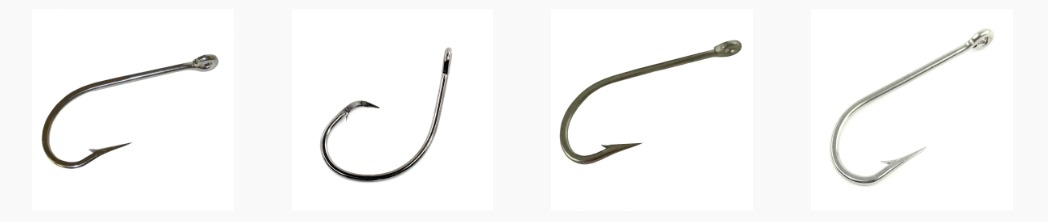
Shop NowA circle hook has a point that curves inward, pointing back toward the shank. That geometry is what makes it work. When a fish swallows a circle hook and swims away, the hook slides out of the throat and rotates until the point catches the corner of the jaw. The harder the fish pulls, the deeper it sets.
The critical rule with circle hooks: do not set the hook. Just reel tight and let the fish load the rod. If you swing hard like you would with a J-hook, you'll pull the hook straight out of the fish's mouth every time. It goes against every instinct, but once you trust the process, circle hooks are incredibly reliable.
This design is why circle hooks are the gold standard for catch-and-release fishing. The hook almost always lands in the corner of the mouth, not down in the gut. Studies across multiple fisheries show gut-hooking rates drop from 30-50% with J-hooks down to under 5% with circles. That's the difference between a fish that swims away strong and one that bleeds out before you get the hook free.
Circle hooks are designed for easy catch and release — pair them with a hook remover for hands-free releases in seconds.
The Mustad Demon Ultrapoint Circle Hooks are a staple in our shop. The Ultrapoint technology means the hook penetrates fast once it finds the jaw corner, and the wire gauge is right for everything from redfish to grouper. For heavier offshore work targeting tuna or sharks, the Mustad 39965 Tuna Circle Hook in 2X strong handles the abuse. And if you're just getting into circle hooks, the Mustad Saltwater Circle Hook Starter Kit gives you a range of sizes to experiment with.
How J-Hooks Work
A J-hook is what most anglers grew up using. The shank runs straight and the point faces up and away from the shank, forming a J shape. When a fish bites, you set the hook with a sharp upward sweep of the rod. The point penetrates wherever it makes contact - lip, jaw, tongue, throat, or gut.
That instant penetration is the J-hook's biggest strength. You feel the bite, you set the hook, the fish is pinned. There's no waiting, no wondering if the hook rotated properly. For artificial lures, vertical jigging, and any application where you need to drive the hook home on a quick strike, J-hooks are still the right tool.
The trade-off is obvious: J-hooks gut-hook fish at much higher rates. When a fish swallows the bait deep, that hook point catches wherever it hits. For fish you're keeping, no big deal. For fish you're releasing - especially undersized fish or species with strict regulations - a gut-hooked fish often doesn't survive. This is exactly why many fisheries now mandate circle hooks for certain species.
The Mustad 3407-DT is the classic O'Shaughnessy J-hook that's been catching saltwater fish for decades. Strong, sharp, and priced right. For live bait applications where you're choosing to run a J-hook (trolling with strip baits, for example), the Gamakatsu Live Bait Hook with its needle point drives home fast. And for serious trolling and big game applications, the Mustad 7691-DT Southern and Tuna Hook handles anything you'll encounter offshore.
Circle Hooks vs J-Hooks: Side by Side
| Category | Circle Hook | J-Hook |
|---|---|---|
| Hook-set technique | Reel tight, no swing | Hard, sharp hook-set |
| Gut-hooking rate | Under 5% | 30-50% |
| Corner-of-mouth hookup | 90%+ | Varies widely |
| Live bait | Excellent | Works, higher mortality |
| Cut bait / chunks | Excellent | Good |
| Artificial lures | Poor | Excellent |
| Vertical jigging | Not ideal | Required |
| Trolling (skirted lures) | Sometimes | Standard |
| Catch-and-release survival | Very high | Lower |
| Regulatory compliance | Required in many fisheries | Restricted in some fisheries |
When Circle Hooks Win
Live bait fishing is where circle hooks dominate. Freelining a live pogie for redfish, drifting a blue runner for king mackerel, soaking a live mackerel for tuna - circle hooks outperform J-hooks in hookup rate and fish survival across every one of those scenarios. The fish eats the bait, you reel tight, and the hook does the rest. The Gamakatsu Octopus Circle Hook 4X Strong handles the big stuff - grouper, tuna, amberjack - while the Owner 5179 Circle Hooks work great for mid-range species where you need a lighter wire gauge.
Bottom fishing is another circle hook slam dunk. When you're dropping baits to the bottom for snapper, grouper, or tilefish, fish often swallow the bait before you feel the bite. A J-hook is already in the gut by the time you pick up the rod. A circle hook slides out and catches the jaw. Given that most bottom species have strict size limits, this matters.
For shark fishing, circle hooks aren't just preferred - they're practically mandatory for ethical fishing. The Epic Shark Hook Circle Hook is built for this application, with heavy wire that handles the torque of a big shark rolling and thrashing at boatside. For more on rigging live bait with circle hooks, check our live bait rigging guide.
Regulations are pushing the industry toward circle hooks fast. Gulf of Mexico reef fish species require non-stainless, non-offset circle hooks when fishing with natural bait. Atlantic billfish tournaments mandate circles. Many state fisheries are following suit. If you fish the Gulf or target billfish, you need circle hooks in your box whether you like them or not.
When J-Hooks Win
Artificial lures are J-hook territory. A circle hook won't set properly on a quick strike when a fish hits a jig, plug, or soft plastic. The fish bites and spits in a fraction of a second - there's no time for the hook to rotate. You need instant penetration, and that's what J-hooks deliver. The Mustad Hoodlum Hook 4X in black nickel is a beast for heavy jig applications where you need a hook that won't straighten.
Vertical jigging requires J-hooks (or assist hooks, which are essentially a J-hook variant). The jigging motion and quick hook-set are incompatible with circle hook mechanics. Same for speed jigging and butterfly jigging - any technique where you're snapping the rod upward to set the hook needs a J-style point.
Trolling with skirted lures and strip baits is another J-hook application. The fish hits a trolling lure at speed, and the rod loads instantly against the drag. J-hooks drive in on impact. Some charter captains are switching to circles for trolling natural baits, but for skirted lures and plugs, J-hooks remain the standard.
Circle Hook Sizing: Know the Difference
One thing that trips people up: circle hooks run smaller than J-hooks at the same number. A 7/0 circle hook has roughly the same gap as a 5/0 J-hook. The curved point takes up space inside the hook gap, reducing the effective bite. When switching from J-hooks to circles, go up 1-2 sizes to match the same effective hook gap.
Offset vs Inline Circle Hooks
An offset circle hook has the point bent slightly to one side of the shank. This makes it set a little easier because the point catches tissue more readily. But that offset also increases gut-hooking rates compared to inline circles - partially defeating the purpose.
An inline circle hook has the point perfectly aligned with the shank. It's harder to set on some bites, but it almost never gut-hooks a fish. The Gamakatsu Octopus Inline Circle Hook is one of the best inline options available. If you're fishing catch-and-release or in fisheries that require non-offset circles, inline is the way to go.
For reference on matching the right hook to the right species and application, check our hook size chart - it breaks down sizing across all major hook styles.
The Bottom Line
This doesn't have to be complicated. Fish live bait or cut bait? Circle hook. Throwing artificials or jigging? J-hook. Trolling skirted lures? J-hook. Trolling natural bait? Circle hook. Fishing a regulated fishery that requires circles? Circle hook, obviously.
If you only keep one type in your box, make it circle hooks. They cover more situations, they keep more fish alive for release, and they're increasingly required by law. The learning curve - trusting the hook and not swinging - takes maybe two trips. After that, you'll wonder why you ever gut-hooked a fish on a J-hook.
Don't overthink it. Match the hook to the technique, keep your points sharp, and let the fish do the work. Tight lines.